 Neditek
What Does MOSFET Do
A MOSFET is essentially an extremely efficient electronic switch, or signal amplifier.
To make this clear, you can think of it as a smart water valve: you only need to apply a weak electrical voltage (voltage signal) at the control end (gate) to accurately turn on, off, or regulate the huge current flowing between the drain and the source. Because it is a voltage-controlled semiconductor device, it requires almost no input current to maintain this control state. It is this unique ability that enables modern integrated circuits and power electronic equipment to complete tens of thousands of high-power switching operations in one second with extremely low energy loss.
Gate, Source, and Drain
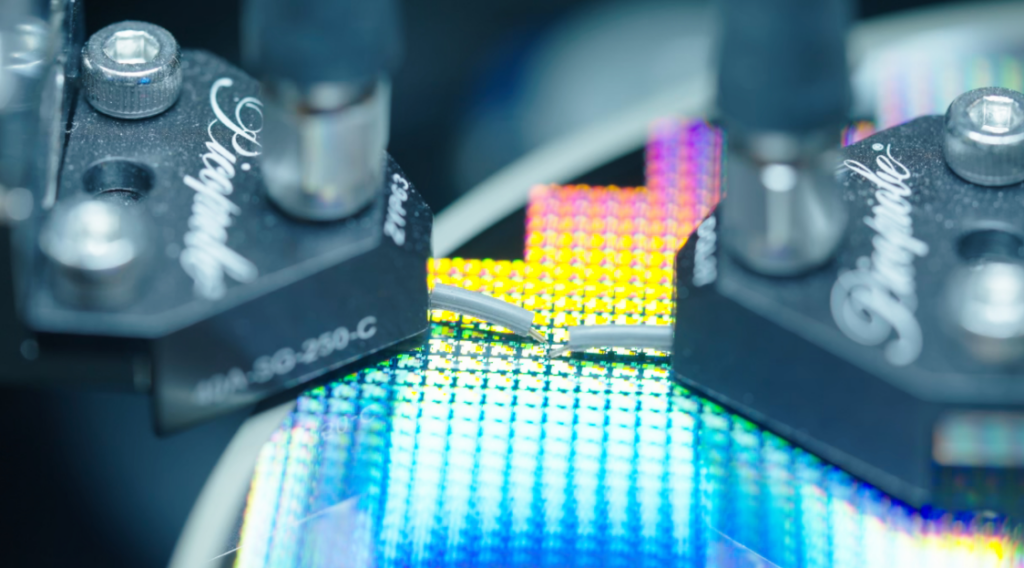
To fully understand what MOSFETs are doing, you still have to look at the three terminals: gate, source, and drain. The old-fashioned mechanical switches in the past relied entirely on the physical contacts inside to close or open the circuit. They were not only slow in action but also prone to mechanical wear and electrical arcing. Dealing with that kind of mechanical fatigue-induced failure is a real headache.
The MOSFET eliminates the need for mechanical moving parts. When you add a small voltage to the gate, it creates an electric field across the gate dielectric, changing the conductivity of the semiconductor channel. It’s like turning the “water valve” wide to let more water flow through or just turning it off and shutting off the flow completely. This smooth, frictionless way of working makes it the most reliable electronic switch in the world.
Accuracy of Voltage Control and Extremely Low Input Current
The most critical point of a MOSFET is that it is controlled purely by voltage. In the past, when running a circuit, if you used an older generation technology such as BJT (bipolar transistor), you had to continuously fill the control terminal with current to keep it “on,” which was very troublesome. But MOSFETs are different; their gates require little to no continuous input current.
This characteristic of voltage control means that the control circuit itself consumes less power. This is directly equivalent to increasing the overall efficiency of the entire system. Energy is not wasted on the useless work of “keeping the switch on” but is precisely delivered to where it belongs.
Amazing Switching Speed and Extremely Low Energy Loss
When it comes to switching speed, the real magic of MOSFETs is revealed. In the current field of power electronics, controlling the on and off of current is no longer simply turning it on or off, but rather adjusting the power through “high-frequency switching.” A MOSFET can switch tens of thousands or even millions of times per second.
When dealing with high power, each transition period from “off” to “on” (even if it is only a few nanoseconds or microseconds) will generate heat, that is, energy loss. Designers often face thermal bottlenecks here. Because MOSFETs switch incredibly quickly, this transition window is compressed to the extreme, significantly reducing losses. It is this ability that has given rise to advanced semiconductor technologies such as industrial-grade SiC (silicon carbide) MOSFETs developed by NEDITEK. Silicon carbide material has pushed this high-speed, low-loss switching feature up another level. When dealing with high voltage and extreme temperatures, it is much more robust (or more reliable) than traditional silicon transistors.
What Are MOSFETs Doing in Real-World Applications?
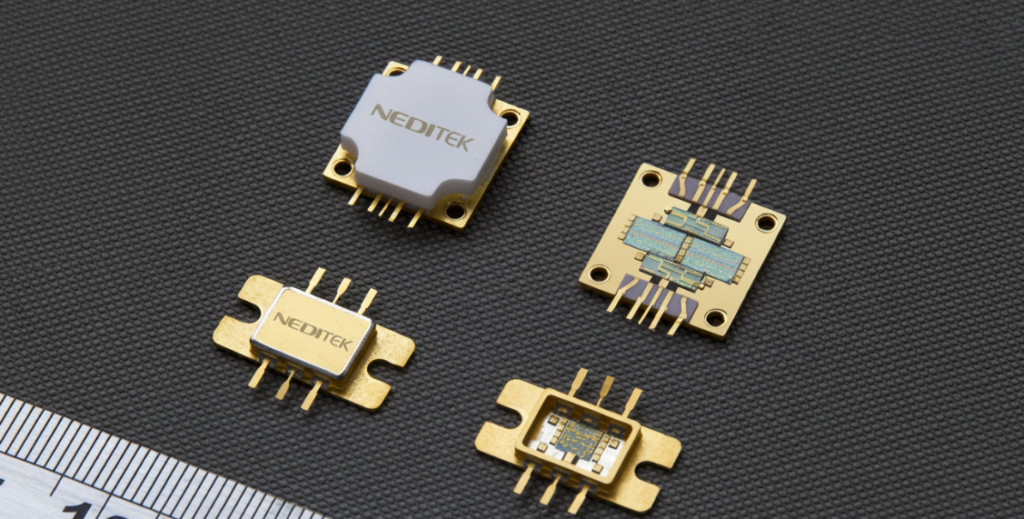
The MOSFET has long become the building block of major high-tech industries. Relying on the extremely low loss to perform core functions, it supports future technology:
Automobiles and New Energy: In electric vehicles (EVs) that now fill the streets, as well as in solar inverters, MOSFETs work by seamlessly converting the DC power in the battery into AC power to drive the motor. By replacing traditional silicon devices with the highly efficient SiC MOSFETs, the EV’s single-charge range can be effectively increased, and the new energy system can also waste less precious electricity.
Aerospace, Exploration, and Rail Transit: In these environments where downtime is absolutely not allowed, MOSFETs act as extremely resistant and reliable switches, carrying huge power loads. Their high efficiency is crucial, whether it’s the heavy-load demands of rail transit and smart grids or the demanding precision requirements of aerospace and detection equipment.
Industrial Applications and White Goods: From the drive control of heavy-duty industrial motors to power regulation of household appliances, MOSFETs silently ensure smooth and efficient operation of machines. Even in those advanced microdisplays, they manage the precise voltage required to light up pixels.
Backbone of Modern Technology
Ultimately, the answer really comes down to two words: control and efficiency. It is the ultimate electronic switch and amplifier, harnessing vast currents at lightning speed with a tiny voltage.
Now the entire industry is actively challenging the limits of power efficiency, thermal management, and switching frequency. Choosing the right semiconductor partner is crucial. Relying on strict quality standards, the industrial-grade SiC MOSFET solution provided by NEDITEK is indeed helping engineers turn those extremely demanding and aggressive circuit designs into reality.
Author: NEDITEK Expert
Hi, I’m a senior hardware engineer specializing in complex power electronics systems. My passion lies in pushing the limits of power efficiency, which is why I constantly explore advanced semiconductor technologies like SiC MOSFETs. Drawing from my practical application experience, I love breaking down hardcore hardware concepts into plain language to help fellow engineers and tech enthusiasts turn aggressive circuit designs into reality.